Improving the Health
of our Watershed
We bring together watershed residents, landowners, and experts to improve the health of the Coos watershed. Rooted in science and driven by the balance between economic and environmental interests, our local, non-governmental network fosters effective communication and practical solutions for land management and restoration.
Who We Are
What We Do
What You Can Do
Announcements
2025 was a great year for CoosWA, and we are excited to tell you all about it!!
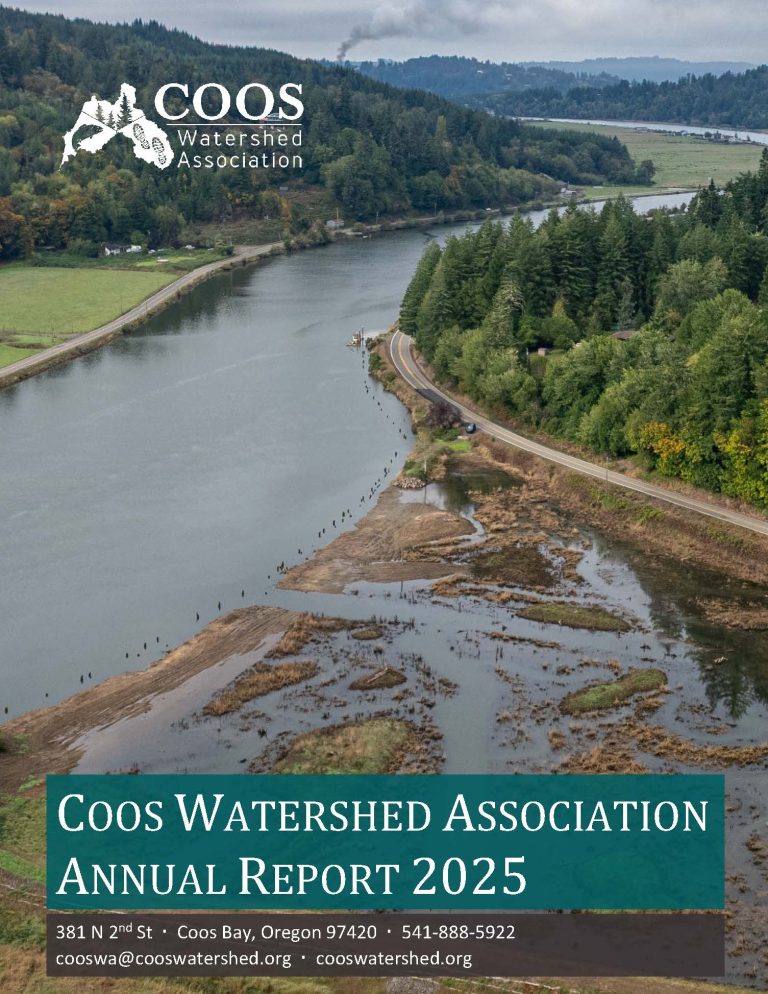
Check out our annual report, which includes photos and stories from some of our most exciting projects in 2025. This is a great place to learn about the types of work we do (restoration, monitoring, plants, invasive species, outreach, education, art, celebration...), how we are funded, how we use those funds, and who we need on our team to make this work happen.
All of our funds go to on-the-ground needs that tie directly to our mission. A large portion goes straight to local contractors, whether they are building bridges, putting logs into streams, producing videos, or painting murals. Look for the bold text throughout the report to see all of our amazing local contractors, without whom this work would simply not be possible.
Thank you for your support and partnership! We hope to see you around the watershed!
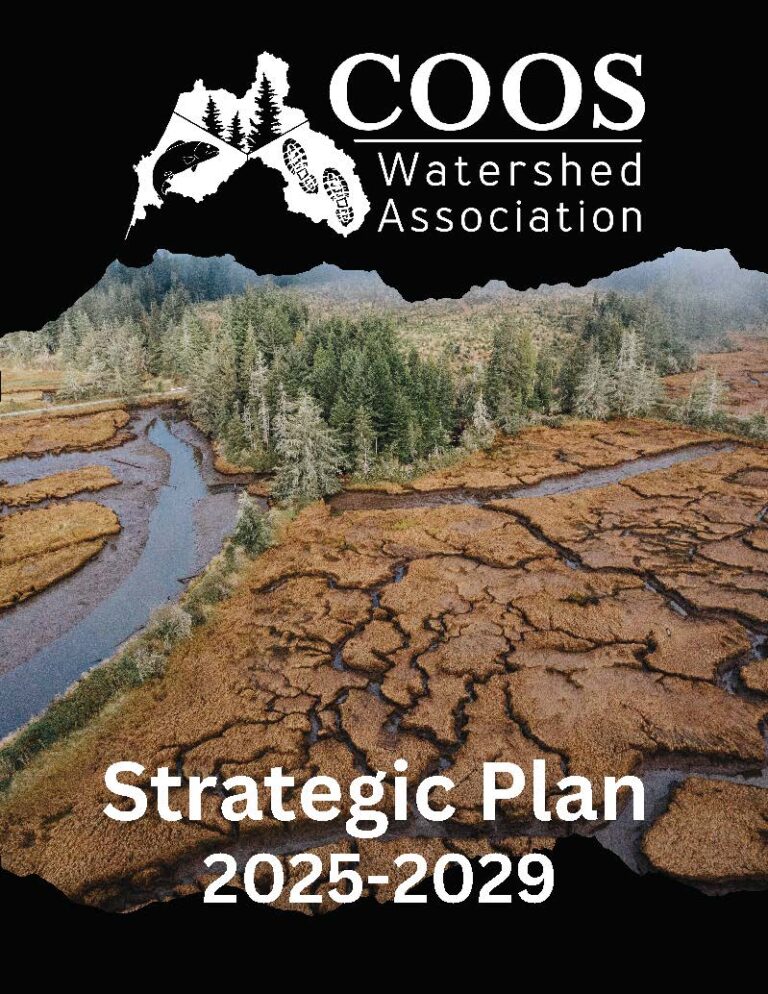
We are excited to share our new Strategic Plan that will guide our organization over the next five years!
Here are our overarching goals.
Goal 1. A community of people is empowered to care about the watershed and actively work to improve watershed health.
Goal 2. Habitat in the Coos watershed is improved to support robust salmon populations and thriving communities.
Goal 3. CoosWA's design protocols and monitoring methods are improved to more effectively implement projects that support long-term ecological function, stability, and resilience for all species in the watershed with an emphasis on salmonids.
Goal 4. CoosWA is resilient and has sustainable human, physical, operational, and financial resources needed to achieve its mission.
Calling all mountain bikers and invasive species enthusiasts: mark your calendars for the 5th annual Gorse Pedal & Pull on October 26, a fun event brought to you by the Gorse Action Group, Coos Watershed Association, Wild Coast Trails Association, 7 Devils Brewery, and local bike shops. The Pedal & Pull is a mountain bike competition where the winner is not measured in time but in pounds of gorse pulled! Grand prize is a bike from Front Street Community Bike Works. Runners-up will win prizes from Blue Sky Bike Shop and Moe's Bike Shop. Free pizza and drinks for all participants (while supplies last). Open to all skill levels!
This event is FREE and open to all ages. REGISTER BY OCTOBER 23 HERE: https://www.eventbrite.com/e/2026-gorse-pedal-and-pull-tickets-1999716747623.
WHY? This silly competition removes a serious threat from our trail system. Gorse has devastating environmental and economic impacts on our South Coast communities. Come be part of the solution to a healthy watershed and a healthy trail system! To learn about other work being done locally on gorse, visit https://gorseactiongroup.org/.
If you have questions or need to borrow a bike, contact engagement@cooswatershed.org.
Why pollinators?
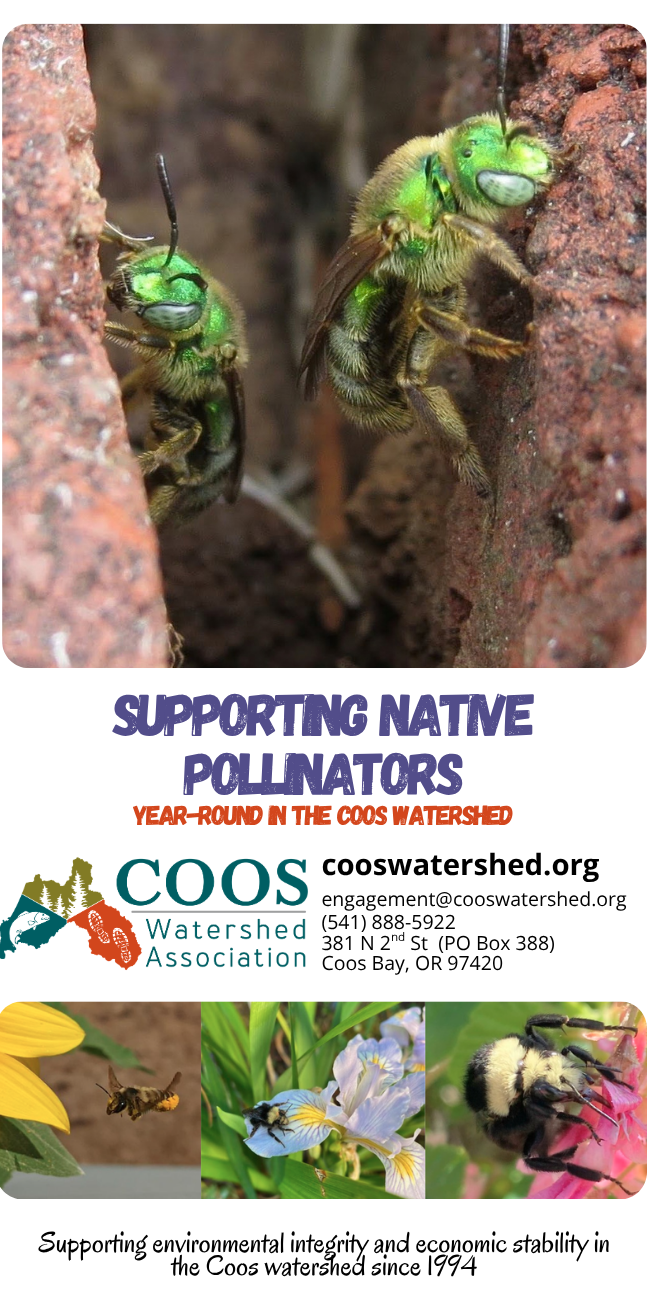
Pollinators are animals that move pollen between flowers and give plants a way to reproduce. At least 30% of our foods require an animal pollinator- without them, we wouldn’t have many nuts, berries, fruits, and vegetables. Many of these pollinators are insects, which are also essential to healthy, resilient food webs and ecosystems.
We are focusing this guide on native bees, the most efficient of insect pollinators. There are over 500 species in Oregon (4,000 in the US!), many of which are solitary (no hive or colony) and have no desire or ability to sting. This guide focuses on four types of native bees that you are likely to see in Coos County, representing 4 different life histories.
Pollinators (and insects in general) are declining at alarming rates, threatening the health of our ecosystems. The good news: there is a lot we can do to support pollinators and reverse declines in our watershed every month of the year